
Understanding RERA: The Ultimate Guide for Modern Homebuyers
Mar 24, 2026, 15:42 IST

Screenshot-of-Haryana-RERA-home-page
Find out what RERA is, its full form, how it works, and more.
RERA, or the Real Estate Regulatory Authority, has fundamentally transformed how Indians buy and sell property. Before the implementation of the RERA Act, the real estate sector was often characterized by a lack of transparency, leaving many homebuyers vulnerable to project delays and unfair practices.Today, RERA serves as the ultimate benchmark for trust, ensuring that every square foot you pay for is accounted for and every promise made by a developer is legally binding.
Let’s learn how RERA works. Plus, important steps for any modern homebuyer to secure their financial future.
RERA stands for the Real Estate Regulatory Authority. It was established under the Real Estate (Regulation and Development) Act of 2016.
While the Act was passed by the Central Government, real estate is a state subject in India. This means that each state and Union Territory has its own specific RERA body (such as MahaRERA in Maharashtra, UP-RERA in Uttar Pradesh, or HRERA in Haryana). It is used to implement the rules and handle local grievances.
RERA acts as a dedicated watchdog for the housing industry. It ensures every stakeholder, from the builder to the broker, follows the same set of rules.
RERA works by creating a mandatory registration system for all real estate projects. Here is how RERA works in India:
The implementation of RERA has shifted the power dynamic back to the consumer. Here are the primary benefits:
Verifying a project is a simple step that should be your first priority before paying the booking amount. Follow these steps:
Step 1: Visit the Official Website: Go to the RERA website of the state where the property is located. Eg: Maharashtra RERA: https://maharera.maharashtra.gov.in/, Haryana RERA: https://haryanarera.gov.in/, etc.
![Screenshot-of-Haryana-RERA-home-page]() Haryana RERA home page (Image Source: https://haryanarera.gov.in/)
Haryana RERA home page (Image Source: https://haryanarera.gov.in/)
Step 2: Go to the Registration Section: Look for a tab labeled “Registration”, “Registered Projects”, or “Search Project.”
![Screenshot-of-Registered-Projects-tab-on-Haryana-RERA-website]() “Registered Projects” tab on HRERA website (Image Source: https://haryanarera.gov.in/login/loginview/2)
“Registered Projects” tab on HRERA website (Image Source: https://haryanarera.gov.in/login/loginview/2)
Step 3: Search for the project: Enter the Project Name, Promotor/Developer Name, or RERA registration number (which the builder is legally required to display on all advertisements).
![Screenshot-of-Haryana-RERA-search-for-the-project-section]() Search for your required project from the highlighted section (Image Source: https://haryanarera.gov.in/admincontrol/registered_projects/2)
Search for your required project from the highlighted section (Image Source: https://haryanarera.gov.in/admincontrol/registered_projects/2)
Step 4: Verify the Details: Once the project opens, review the details, including the sanctioned plan, project layout, structural completion, status (registered/lapsed), and the registration validity.
Before 2016, the real estate sector was plagued by a massive “trust deficit.” Thousands of homebuyers were stuck in “stalled projects” where they were paying both home loan EMIs and monthly rent because developers had diverted project funds elsewhere.
The government introduced RERA to:
RERA ensures complete transparency in real estate through:
RERA has turned the dream of homeownership from a “buyer beware” risk into a “buyer-aware” opportunity. While no regulation can eliminate every risk, RERA provides a robust safety net that ensures your investment is protected by the law of the land.
As the market continues to mature, being a RERA-informed buyer is your best strategy for a stress-free home-buying journey.
Explore RERA Approved Projects with
Ready to find your dream home? TOI Homes is committed to helping you find properties that aren't just beautiful, but fully compliant. We feature a curated list of RERA-registered projects across India’s top cities, complete with expert insights and verification details.
Let’s learn how RERA works. Plus, important steps for any modern homebuyer to secure their financial future.
What is RERA and Its Full Form?
While the Act was passed by the Central Government, real estate is a state subject in India. This means that each state and Union Territory has its own specific RERA body (such as MahaRERA in Maharashtra, UP-RERA in Uttar Pradesh, or HRERA in Haryana). It is used to implement the rules and handle local grievances.
RERA acts as a dedicated watchdog for the housing industry. It ensures every stakeholder, from the builder to the broker, follows the same set of rules.
How Does RERA Work in India?
- Mandatory Registration: No developer can advertise, sell, or book a plot or apartment in a project that is not registered with the state RERA. This applies to projects where the land area exceeds 500 square meters or involves more than eight apartments.
- The Escrow Account Rule: Builders are required to deposit 70% of the money collected from buyers into a separate Escrow Account. These funds can only be used for land and construction costs of that specific project. It ensures developers cannot divert their clients' money and start new projects.
- Continuous Monitoring: Builders must provide quarterly updates on their project’s progress on the official RERA website. With modernization, many states have integrated AI-driven tracking and live photo updates. With this feature, you can see your home being built from your smartphone.
Key Benefits of RERA for Homebuyers
- Standardized Carpet Area: Before RERA, builders used confusing terms like “super built-up area” to inflate prices. RERA mandates a uniform definition of carpet area (the actual usable area within the walls), ensuring you pay only for the space you truly get.
- Right to Information: Buyers have the legal right to access sanctioned plans, layout designs, and the implementation schedule of the project.
- Timely Project Delivery: It is important for the developers to stick to declared timelines. If they are unable to do so, they have to pay interest to the buyer as compensation. Hence, ensuring accountability for delays.
- Structural Defect Liability: If you discover structural defects or poor workmanship within five years of taking possession, the builder must fix it for free within 30 days.
How to Check If a Property Is RERA Registered?
Step 1: Visit the Official Website: Go to the RERA website of the state where the property is located. Eg: Maharashtra RERA: https://maharera.maharashtra.gov.in/, Haryana RERA: https://haryanarera.gov.in/, etc.
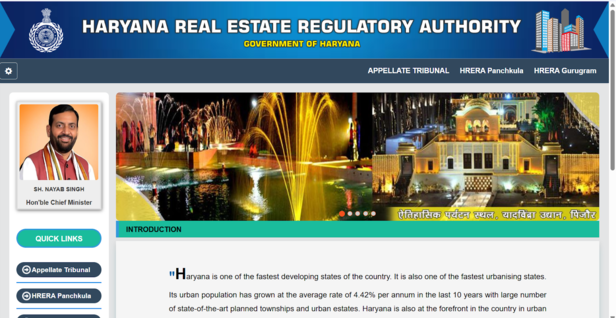
Screenshot-of-Haryana-RERA-home-page
Step 2: Go to the Registration Section: Look for a tab labeled “Registration”, “Registered Projects”, or “Search Project.”
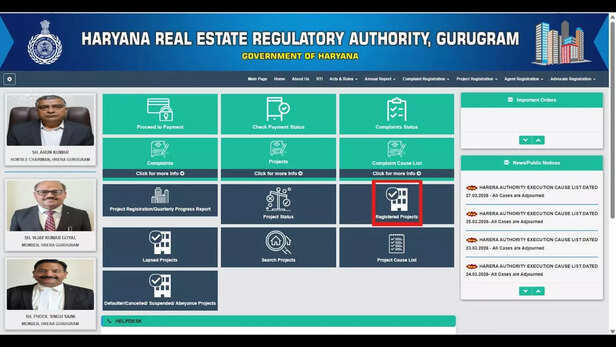
Screenshot-of-Registered-Projects-tab-on-Haryana-RERA-website
Step 3: Search for the project: Enter the Project Name, Promotor/Developer Name, or RERA registration number (which the builder is legally required to display on all advertisements).
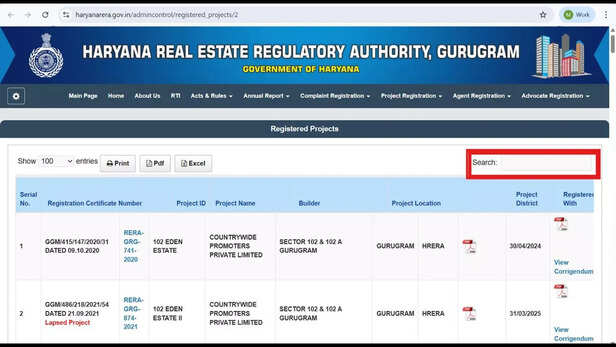
Screenshot-of-Haryana-RERA-search-for-the-project-section
Step 4: Verify the Details: Once the project opens, review the details, including the sanctioned plan, project layout, structural completion, status (registered/lapsed), and the registration validity.
Why Was RERA Introduced in India?
The government introduced RERA to:
- Bring Accountability: To hold developers responsible for their promises.
- Reduce Litigation: To create a fast-track dispute resolution mechanism so buyers didn't have to spend decades in civil courts.
- Boost Investment: By making the sector transparent, RERA encouraged both domestic buyers and Foreign Direct Investment (FDI) back into Indian real estate.
How RERA Enhances Transparency in Real Estate?
- Public Disclosures: Every detail, from the developer’s past track record to the project’s legal approvals, is a matter of public record.
- No False Advertising: Builders cannot promise a “luxury clubhouse” in a brochure if it isn't in the RERA-approved plan. Any deviation from the original plan requires the consent of two-thirds of the allottees.
- Professionalizing Agents: Real estate brokers must also register with RERA. This ensures that the person selling you the house is accountable for the information they provide.
Conclusion
As the market continues to mature, being a RERA-informed buyer is your best strategy for a stress-free home-buying journey.